
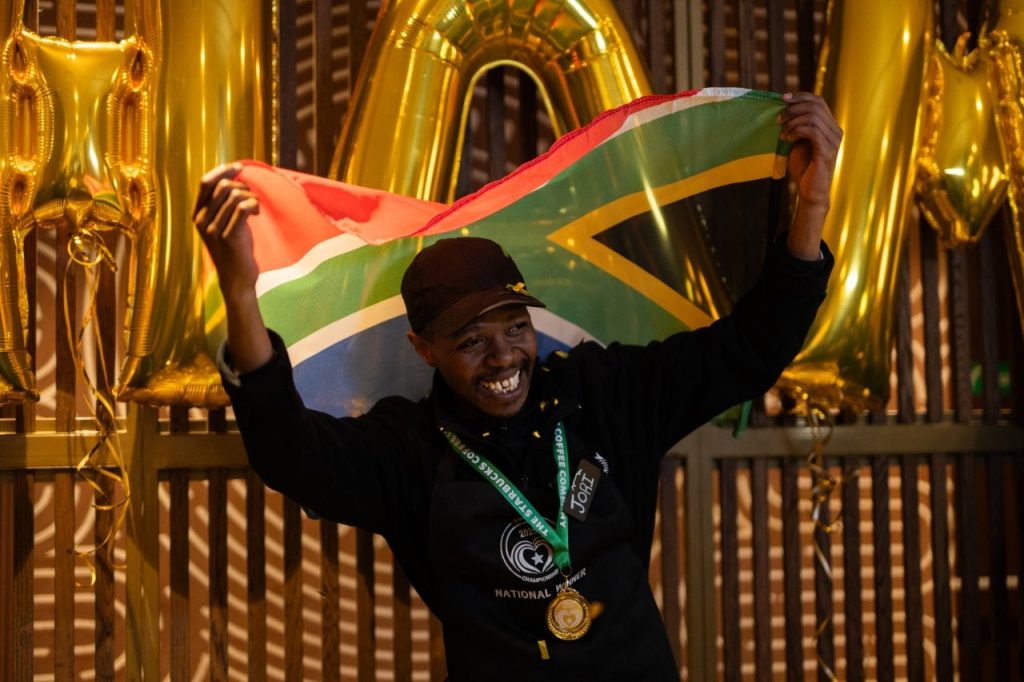
When Starbucks opened its first store on African soil ten years ago, Kabelo Jori was only beginning his own story behind the coffee bar. A decade later, those journeys meet in a deeply personal moment that will take the South African barista to the heart of Rwanda’s celebrated coffee fields.
For Starbucks, Rwanda has never been just another coffee-producing country. Since 2004, the company has sourced coffee from the East African nation, helping support an industry that became part of Rwanda’s rebuilding process after the 1994 genocide. Coffee farming grew into more than commerce. It became recovery, opportunity and hope.
In 2009, Starbucks opened its Kigali Farmer Support Centre, the first on the African continent. The centre works directly with smallholder farmers, helping improve crop yields, soil health and sustainable farming practices. Today, nearly half a million Rwandan farmers depend on the coffee industry for their livelihoods.
Behind every bag of Rwandan coffee enjoyed in South Africa lies more than twenty years of partnership, resilience and shared purpose.

For Kabelo Jori, Rwanda represents far more than the origin of a coffee he has served countless times. It represents a deeper understanding of what coffee truly carries.
After competing against 83 fellow Starbucks partners, Kabelo earned his place on the Starbucks Origin Experience trip to Rwanda — an opportunity that will take him directly to the source of one of the brand’s most celebrated coffees.
Reflecting on the moment he learned he had been selected, Kabelo described emotions far greater than excitement.
“Honestly, it felt bigger than excitement. It was a mix of disbelief and responsibility. Rwanda wasn’t just a destination. It felt like being invited back to the beginning of something I’ve been part of for years without fully understanding. I was nervous, yes, but more than that, I felt chosen to carry a story.”
What began as a competition soon transformed into something far more meaningful.
“It stopped being a competition the moment I realised I wasn’t trying to win anymore. I was trying to represent. Represent my store, my partners and every cup I’ve ever served. That shift from proving something to standing for something, that’s when it became a calling.”
For Starbucks baristas, the purple apron represents mastery and expertise. But for Kabelo, this experience has redefined what mastery means.
“Before, mastery felt like precision, recipes, technique, consistency. Now, mastery feels like connection. It’s understanding the hands behind the coffee, the soil, the story, and carrying that with intention every time I serve a cup.”
Having served Rwandan coffee to hundreds of customers, Kabelo is now preparing to stand on the very soil where those beans are grown. And when he returns, he hopes the journey changes the way he works forever.
“I hope my hands slow down. Not in skill, but in awareness. I want every movement to carry meaning, knowing exactly where this coffee comes from and who made it possible. I don’t just want to make drinks. I want to honour them.”
For Kabelo, the perfect cup of coffee is not defined by flavour alone.
“A perfect cup feels like presence. Like everything else pauses for a second. It’s warmth, but also clarity. It’s that quiet moment where nothing needs to be added or changed. You feel it before you even think about it.”
That emotional connection is something he witnesses behind the bar every day.
“Yes. It’s that moment just after the first sip, when someone doesn’t speak. They just pause. You see it in their face. That silence is everything. That’s when I know the coffee has done something deeper than just taste good.”
Asked what Rwanda’s coffee would say to South Africa, his answer carried the same thoughtfulness that defines his journey.
“Slow down and listen to me. Not just taste me, but understand me. There’s a story in every sip and it deserves your attention.”
Even the process of making coffee, he explains, is often guided by instinct as much as skill.
“I’ve redone a drink more times than I’d like to admit. Not because it was wrong on paper, but because it didn’t feel right. Sometimes you just know. It might look perfect, but if it doesn’t sit right with you, you start again.”
As Kabelo boards a plane to Rwanda, the experience promises to reshape not only his understanding of coffee, but also his understanding of purpose.
“Someone more grounded. More aware. Less focused on being impressive and more focused on being intentional. The person coming back understands that coffee isn’t just a product. It’s people, its place and its purpose.”
Ten years after Starbucks planted roots in Africa, Kabelo Jori’s story stands as a reflection of what those roots have grown into — connection, craftsmanship and a new generation of African coffee storytellers.