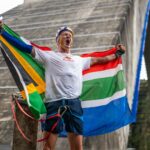
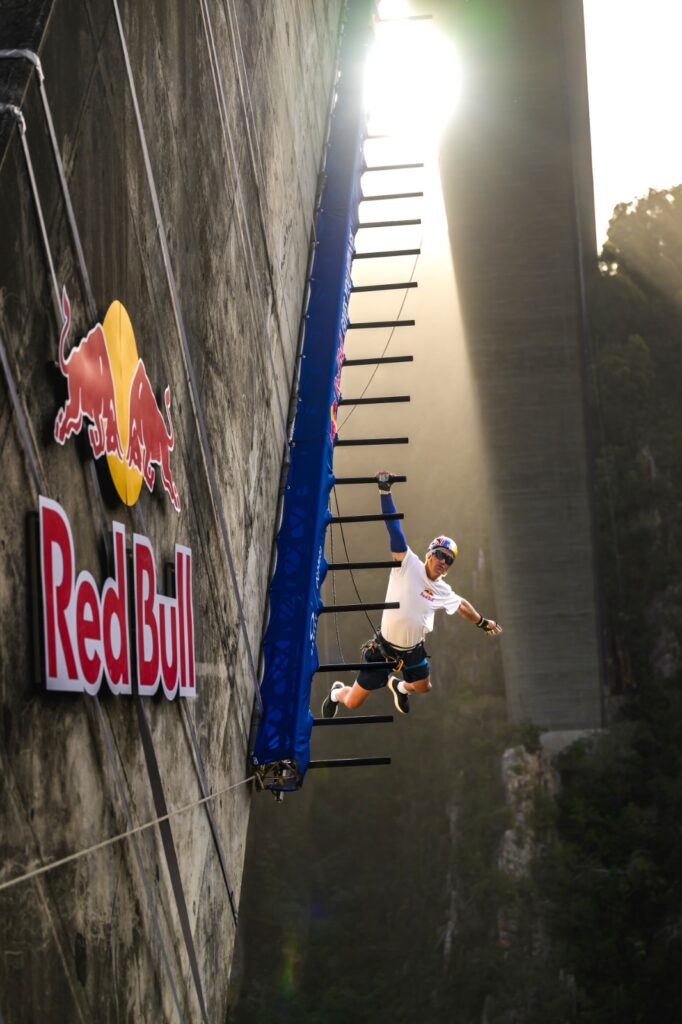
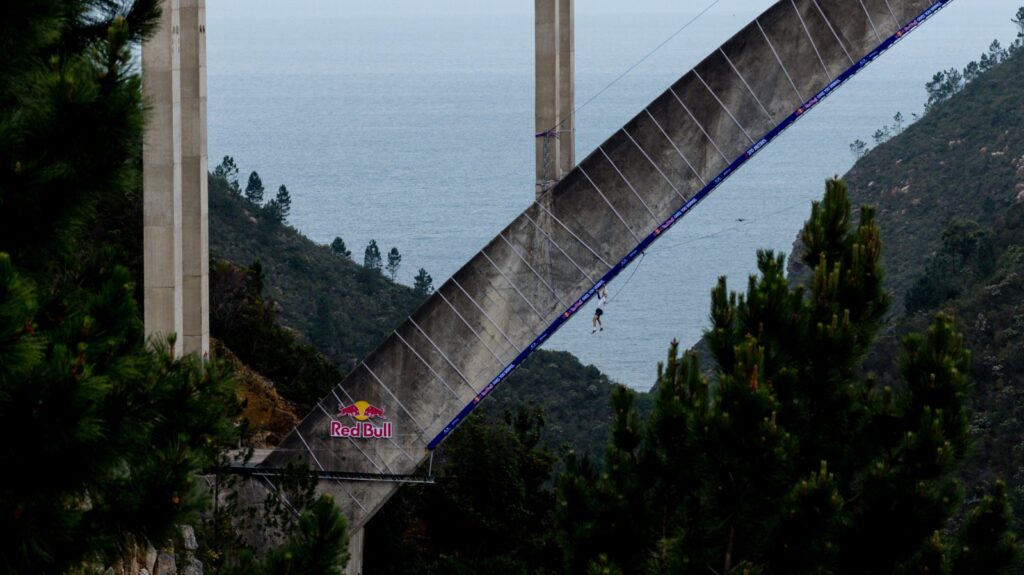
South African obstacle course racing (OCR) world champion Thomas van Tonder has turned one of the country’s most iconic landmarks into the ultimate test of strength, endurance and mental resilience. On 26 October 2026, the Red Bull athlete made history by crossing the Bloukrans Bridge arch on 600 monkey bars suspended 216 metres above the river below.
The challenge, known as Red Bull Bridge Bars, saw Thomas navigate more than 280 metres of monkey bars beneath the bridge’s towering structure, completing the crossing in 47 minutes and 37 seconds.
But this wasn’t simply about having the strongest grip or the biggest muscles. It was about facing a challenge so unfamiliar that even a world champion couldn’t be certain he would make it to the other side.
600 Bars, One Unforgiving Bridge
Connecting the Western Cape and Eastern Cape along South Africa‘s N2, Bloukrans Bridge is already synonymous with adrenaline. Known for its spectacular height and one of the world’s highest commercially operated bungee jumps, the landmark provided a fitting backdrop for an achievement that pushed human endurance into extraordinary territory.
The route began with a brutal incline of approximately 45 degrees, forcing Thomas to climb backwards while relying on his hands to support his body weight.
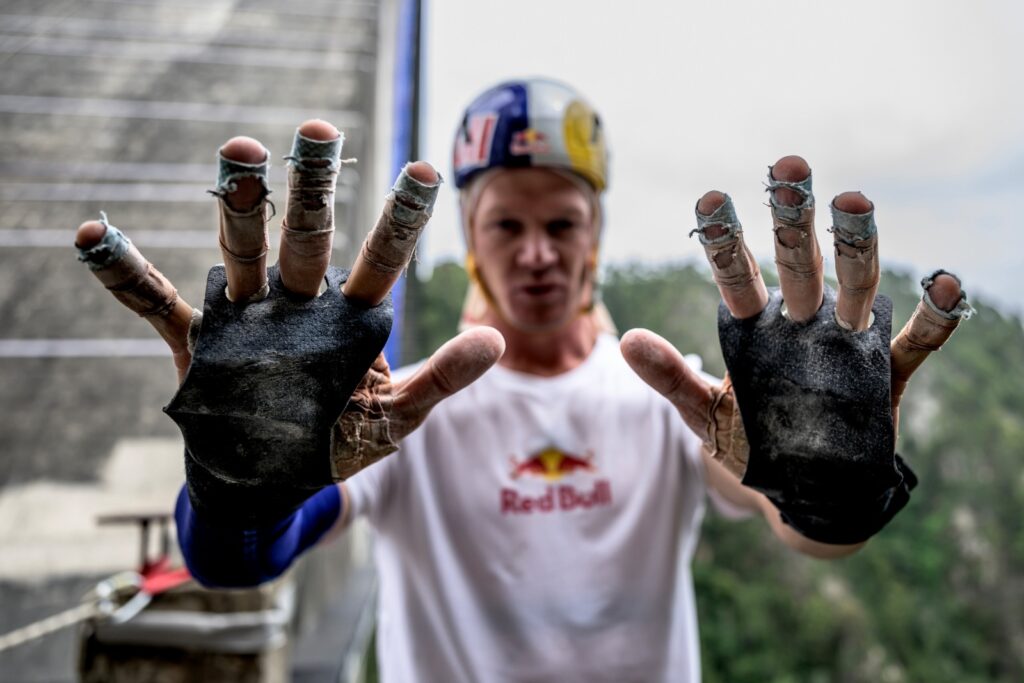
Starting at 10:21, he was already battling the physical demands within minutes. By 10:34, his hands were struggling.
Despite extensive preparation and simulated training, the reality of the bridge proved far more punishing than expected.
“We simulated and trained as much as we could, but nothing can really compare to just the continuous beating that that incline puts on the same muscle group,” .
Thomas explained
It was an early reminder that experience and preparation can only take an athlete so far when confronting something that has never been attempted before.
When Strength Becomes a Mental Battle
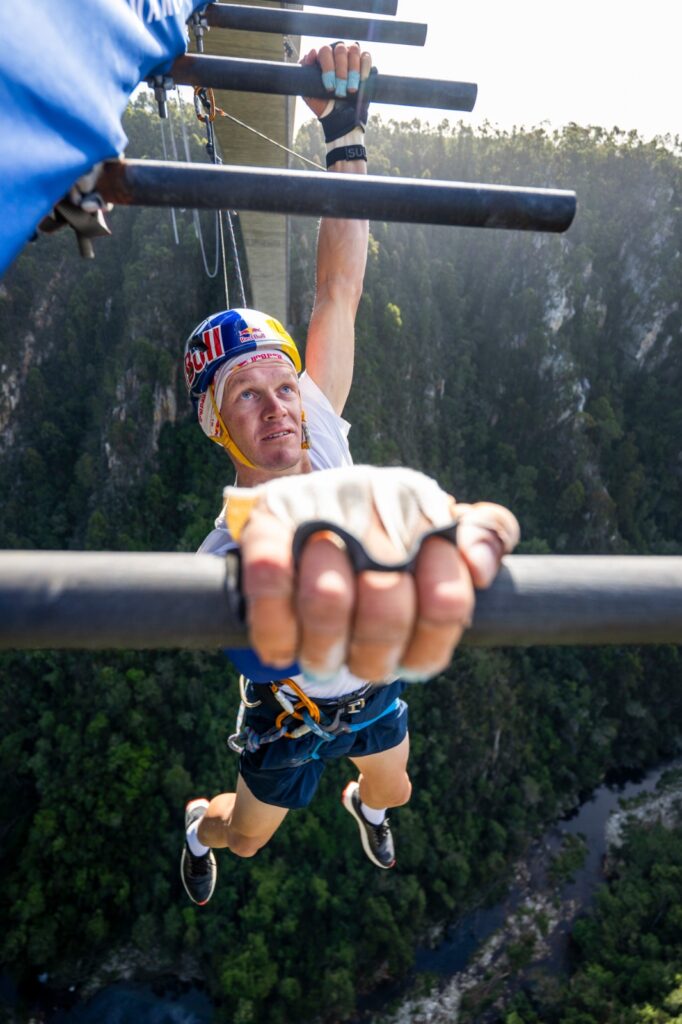
Reaching the crown of the arch brought a different kind of challenge. With the bridge flattening out, Thomas had to fight fatigue, maintain his grip and manage the psychological pressure of seeing just how far he still had to travel.
The finish looked impossibly distant.
“If you look at the finish, it’s so far out of reach and there’s so many bars in between. It seems undoable,” .
he said
Instead of focusing on the entire crossing, Thomas broke the challenge into smaller, achievable targets, communicating with Richard Lievaart, the head of rigging and safety, as he worked towards each point.
At one stage, hanging upside down left him battling a throbbing head and the risk of fainting. He had to trust his exhausted hands to turn him upright again.
They held.
That moment captures the deeper story behind Bridge Bars: resilience isn’t always about pushing harder. Sometimes, it’s about recognising when something is wrong, adjusting your approach and finding the composure to continue.
The Final Metres Tested Everything
The descent brought another complication. Gravity began pulling Thomas downwards, forcing him to control his movement while preventing his exhausted hands from slipping off the bars.
By the final 20 metres, every movement demanded absolute concentration.
His fingers were ripping through their protective tape, and the possibility of a missed bar remained a constant concern. Even then, he refused to treat the finish as guaranteed.
Thomas had deliberately chosen the arch because he wasn’t sure he could complete it.
“This is by no means something I know I can do, which means it’s the right challenge,”.
he said
That willingness to confront uncertainty is what made the achievement more than a physical record. It offered a powerful reminder that meaningful growth often begins where confidence ends.
Behind the Record Was a Team
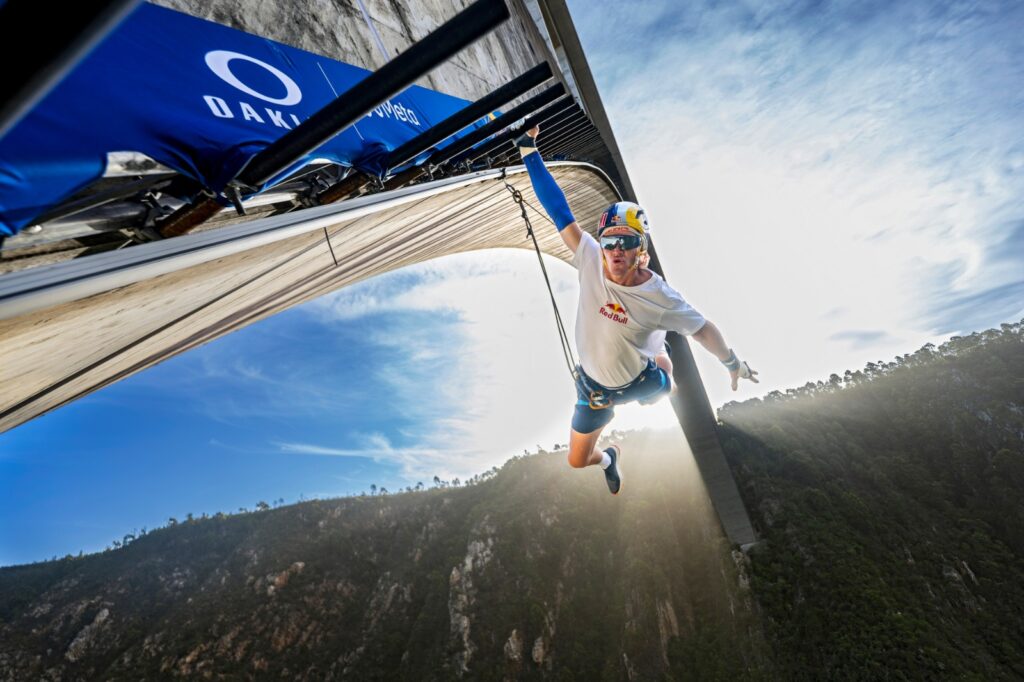
While Thomas carried the physical burden, the achievement depended on a team working behind the scenes.
Lievaart and his crew constructed the course without drilling into or permanently altering the bridge. Their installation relied on two independent safety points, with the team working through the night to prepare the structure.
The setup demanded careful engineering, precision and coordination in an environment where mistakes could have serious consequences.
For Thomas, their contribution was central to the accomplishment. The safety crew remained in position throughout the crossing, monitoring the system and helping him navigate the challenge.
Their work highlights an important truth about extreme sports: the athlete may be the face of the achievement, but successful execution depends on the people whose expertise makes the attempt possible.
A South African Achievement Built on Resilience
After 47 minutes and 37 seconds, Thomas reached the other side, completing a challenge that combined engineering, athletic ability and extraordinary mental control.
He admitted that the incline had humbled him, despite arriving with confidence.
“I have finished what I started. I set the big, crazy goal, and we actually get it done,” .
he said
For South Africa‘s growing action-sports community, Bridge Bars represents the spirit of pushing beyond familiar limits. It shows what can happen when an athlete embraces uncertainty, prepares for the unknown and trusts a team to help turn an ambitious idea into reality.
Sometimes, the biggest achievement isn’t proving that you can do something.
It’s being willing to find out.