Tradition can mean many things in music. It can be something inherited, protected, repeated — or something that evolves every time a new generation picks it up.
For award-winning South African pianist and composer Bokani Dyer, tradition is firmly in that last category.
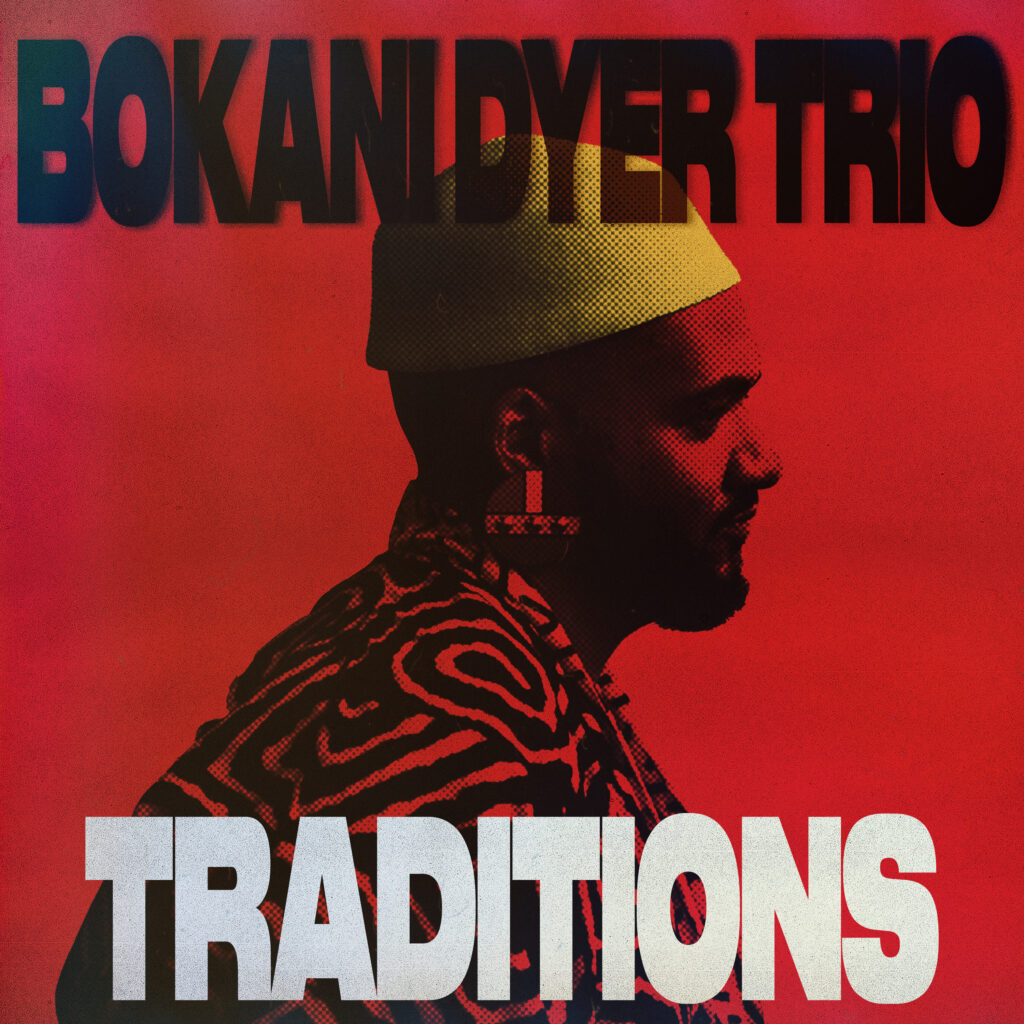
His new album, Traditions, released on 1 October 2026, looks at musical lineage through a contemporary lens, bringing together songs and influences from different cultures and generations and reshaping them through the intimate language of a piano trio.
Rather than trying to distance himself from what came before, Dyer gets closer to it.
Looking Back Without Staying There
Recorded with longtime collaborators Timothy Norton on bass and Lumanyano Mzi on drums, Traditions marks a notable shift in Dyer’s catalogue.
For the first time, the majority of the repertoire consists of covers.
But these aren’t straightforward recreations. Dyer approaches the compositions with curiosity, asking how familiar pieces can speak differently when placed in a new musical environment.
That makes the album particularly relevant in a South African context, where music is constantly moving between generations, communities and cultural traditions.
Dyer’s relationship with that idea is also deeply personal. Growing up in a musical household shaped by his father, renowned musician Steve Dyer, he inherited more than an appreciation for music. He inherited a philosophy rooted in humanity and Ubuntu.
Now, he is adding his own chapter to that lineage.
From Xhosa Folk Song to Contemporary Jazz
One of the clearest examples is “African Piano: Inxembula”, the album’s focus track.
The traditional Xhosa folk song was famously recorded by uhadi player Nofinishi Dywili and the Ngqoko Women’s Ensemble. It also became a struggle song during apartheid, carrying memories far beyond its musical arrangement.
Dyer’s interpretation moves the song into a new setting, bringing together piano, bass, flute and drums.
The result isn’t an attempt to replace the original. Instead, it demonstrates how a piece of cultural memory can continue travelling — carrying its history while finding new meaning with another generation.

Passing the Baton to the Next Generation
That conversation between generations also runs through “Thembisa”, featuring rising vocalist Phoebe Mgxaji.
The track reinterprets a composition from Andile Yenana’s influential We Used To Dance, connecting Dyer’s generation with younger voices pushing South African jazz forward.
It’s a deliberate choice.
Dyer isn’t only looking backwards at the artists who influenced him; he’s also making room for the musicians who will determine where the music goes next.
That philosophy gives Traditions a sense of movement. It becomes less about preserving the past exactly as it was and more about keeping the conversation alive.
A South African Sound With Global Reach
The album arrives at an important moment in Dyer’s career.
His work on the 2025 film Sabbatical earned him a SAFTA for Best Achievement in Song, while an album he produced, Seven, won Best Adult Contemporary Album at the 2025 South African Music Awards.
His international profile has also continued to expand through performances across the United States, Europe and Australia, while his work in South Africa has included Home at Last, his tribute to legendary pianist Bheki Mseleku.
With Traditions, Dyer now takes another distinctly South African conversation to international audiences.
Ultimately, the album asks a deceptively simple question: what happens when we inherit a tradition but refuse to let it remain frozen in time?
For Dyer, the answer is music that remembers where it comes from while still finding somewhere new to go.
Stream / Download: https://africori.to/bokanidyertriotraditions