Your heart never clocks out. Between early morning commutes, long working hours, late-night deadlines and trying to squeeze a workout into an already packed schedule, it keeps going. The challenge is finding time to pay attention to what your body might be telling you.
For World Heart Day, observed annually on 29 September, Samsung is highlighting how wearable technology can help people become more aware of their everyday health habits. Through the Samsung Galaxy Watch and Samsung Health app, users can access insights into their heart activity, sleep, stress and movement, bringing personal wellness into a space many people already know well: their wrist.
For South Africans balancing busy lifestyles, the conversation goes beyond having another smart device. It is about making health awareness part of the everyday routine.
Turning Everyday Habits Into Health Insights
Looking after your heart does not always begin with a dramatic lifestyle change. Sometimes, it starts with recognising that you have been sleeping poorly, moving less than usual or pushing through another stressful week without taking a break.
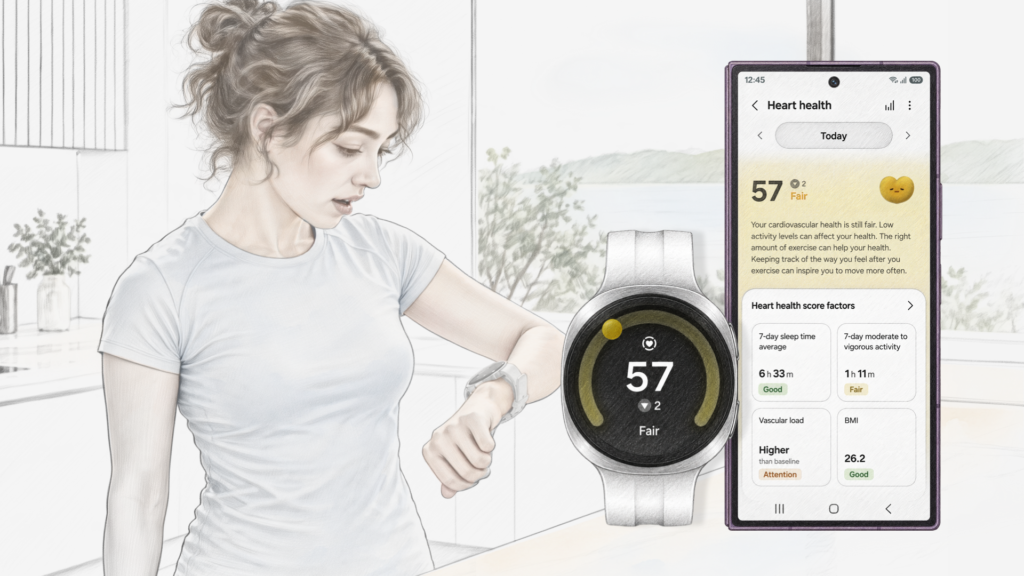
Samsung Health’s Heart Health Score is designed to simplify some of these patterns by combining indicators such as sleep duration, daily activity, body composition and vascular load into a single score.
The idea is straightforward: make complex information easier to understand so users can recognise changes in their habits and consider practical adjustments.
For example, if your activity levels have dropped over several days, the watch can reflect that change in its insights and recommend getting moving again. Rather than relying entirely on memory or motivation, users have another way to monitor their routines and identify opportunities to improve them.
However, a score is a guide to personal wellness, not a medical diagnosis or a guarantee of cardiovascular health.
Technology That Looks Beyond Your Heartbeat
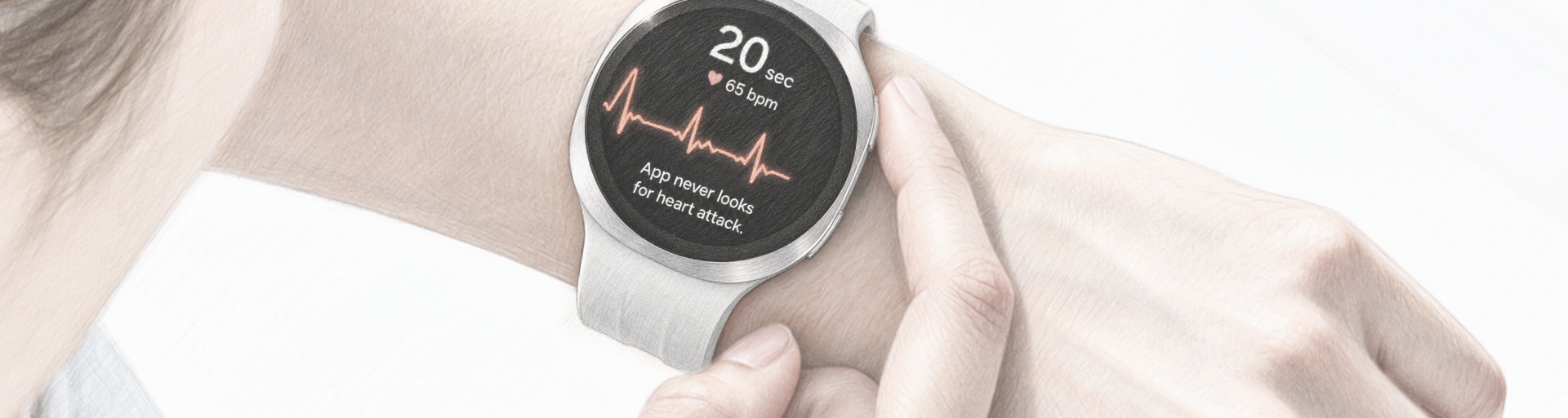
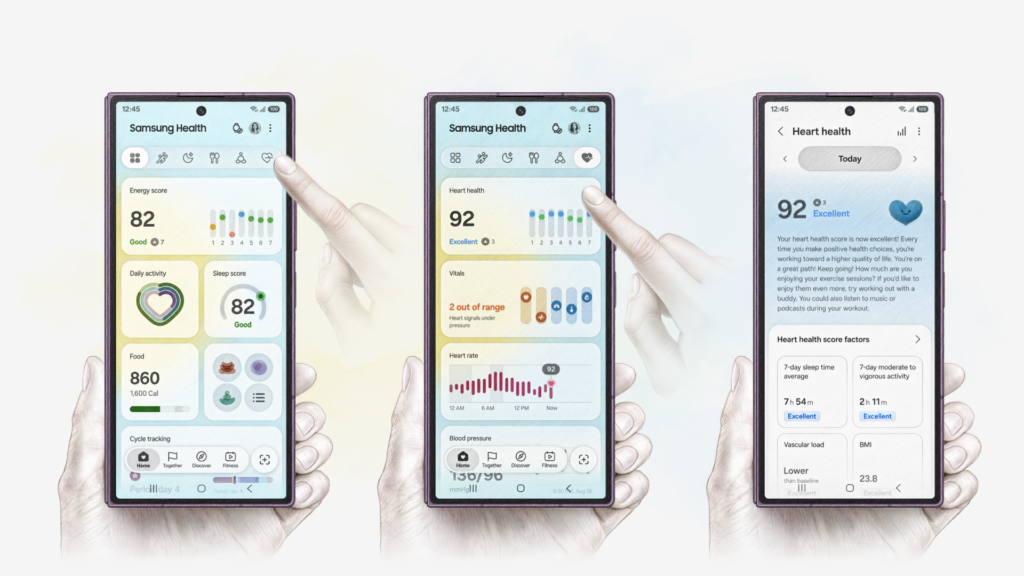
Modern wearables are evolving beyond counting steps and recording workout sessions. Samsung Galaxy Watches combine optical heart-rate monitoring with electrocardiogram (ECG) and bioelectrical impedance analysis (BIA) sensors to provide a broader picture of selected health indicators.
Depending on the compatible device, phone, software and regional availability, users can access features such as blood pressure measurements and ECG recordings.
The blood pressure feature requires an initial calibration with a conventional cuff-based monitor, followed by recalibration every 28 days. ECG readings are recorded when users follow the watch’s measurement instructions, while Irregular Heart Rhythm Notification can alert eligible users to patterns that may indicate atrial fibrillation.
These tools offer additional information that may help users recognise when professional medical advice is needed. They do not replace clinical assessments, and availability can vary by market.
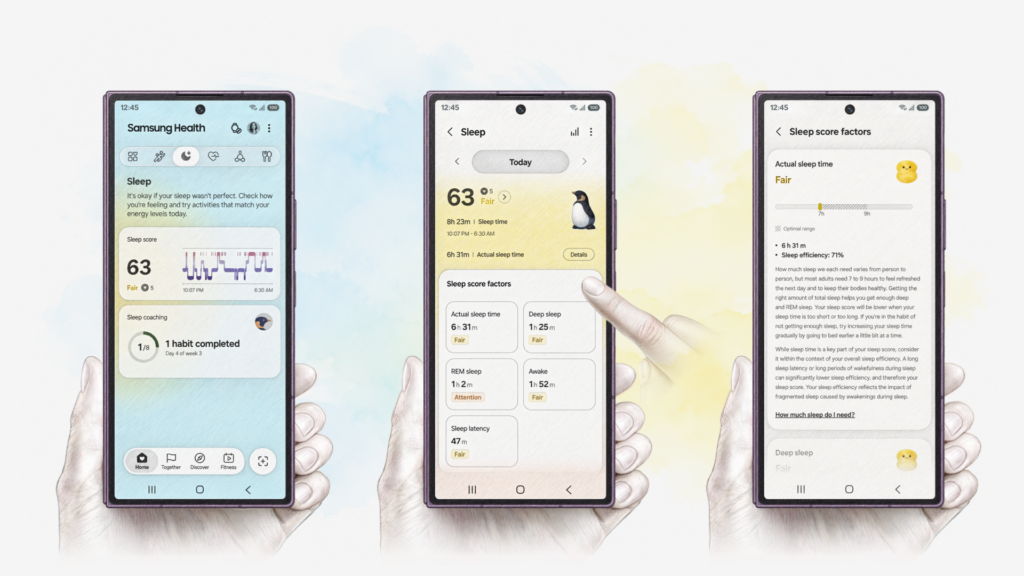
Your Health Doesn’t Stop When You Sleep
Sleep is often sacrificed when work, studies, family responsibilities and social commitments compete for attention. Yet what happens overnight can offer useful clues about recovery and overall wellbeing.
When worn during sleep, compatible Galaxy Watch devices can monitor indicators including sleeping heart rate, heart-rate variability, respiratory rate, skin temperature and blood oxygen saturation.
Samsung Health uses personal baseline measurements to help identify meaningful changes in selected readings. These insights can encourage users to pay closer attention to rest and recovery or seek medical guidance when something seems unusual.
It is a reminder that wellness is not only about how much you accomplish during the day. Recovery deserves a place in the routine, too.
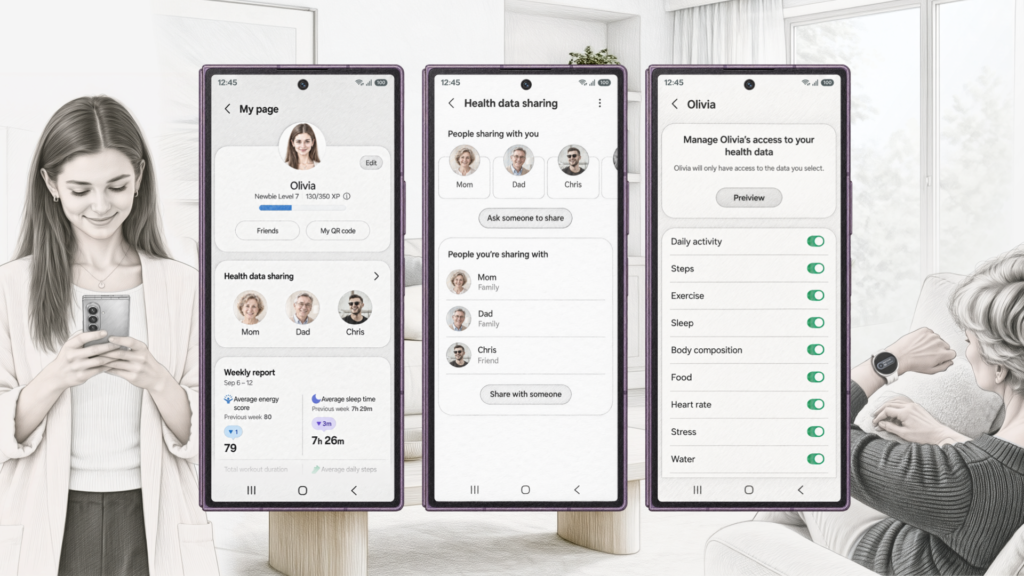
Connected Care for the People Who Matter
Heart health also has a family dimension. Many young adults help care for parents and grandparents while managing responsibilities of their own, sometimes across different cities or provinces.
Samsung Health’s Health Data Sharing feature allows users to share selected health information with consenting family members or other trusted people. Depending on the information shared and device compatibility, this can include activity, heart rate, blood pressure and medication-related information.
For families separated by distance, this offers another way to stay informed and support healthier routines without turning every check-in into a conversation about health.
Privacy and consent remain important: users choose which supported information they share.
Making Prevention Part of Everyday Life
World Heart Day is an opportunity to rethink how health fits into modern living. Technology can make certain measurements and patterns easier to access, but meaningful change still depends on everyday choices: getting enough sleep, moving regularly, eating well and seeking appropriate medical care.
Samsung Galaxy Watch brings these insights into a familiar, accessible format, helping users pay closer attention to their routines.
The bigger takeaway is simple: your smartwatch can offer useful information, but you remain in charge of what happens next. The most valuable health technology is the kind that encourages you to take action beyond the screen.
Technology and health disclaimer: Features vary by Galaxy Watch model, compatible Samsung Galaxy phone, software version and country. Certain functions require a Samsung account and the Samsung Health app. Blood pressure monitoring requires calibration with a separate cuff monitor. Health features are not intended to diagnose or treat medical conditions or replace professional medical advice.