
Africa Is Not One Country: Why the Travel Industry Is Failing the Continent
For all the discussion around Africa’s vast tourism potential, one stubborn problem remains unresolved: the world still views the continent as a single destination. According to Wilson Tauro, Country Manager Southern Africa for Air France-KLM, this misconception is not only inaccurate but actively limiting Africa’s growth in global travel.
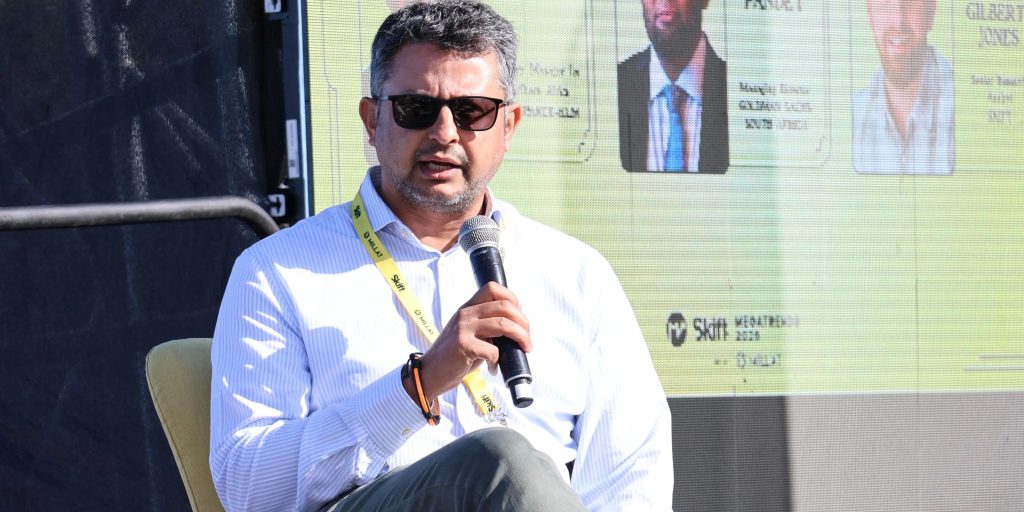
Speaking at the 2026 Skift Travel Megatrends event in Cape Town, Tauro highlighted how deeply rooted this perception is.
“One of the biggest challenges Africa faces is that it’s seen as one country. If someone sneezes in Ghana, the rest of the world assumes the whole continent is sick. That simply doesn’t happen with Europe.”
he said
The Clarity Gap
Tauro contrasts Africa’s global image with that of Europe, where travellers clearly understand the distinct identities of individual countries. Visitors know what to expect from Germany compared with France, Italy, or Spain.
He argues the travel industry has failed to communicate that same clarity about Africa’s 54 diverse nations.
“Africa is not only about safari. It’s about diversity, culture, art, music, food, history and lived experience. Every country has something different to offer.”
Because this diversity is poorly communicated, tourism flows remain heavily concentrated in a few destinations. North Africa — particularly Morocco, Tunisia and Egypt — accounts for more than half of international arrivals, followed by East Africa’s safari hubs and South Africa. Beyond these regions, much of the continent remains largely invisible to global travellers.
“Only about 5% of global tourists travel to Africa. That’s a systemic failure, not a lack of product,”.
Tauro noted
The ‘Cape and Kruger’ Concentration
Even within South Africa, tourism patterns reveal limited diversification. Tauro points out that around 90% of visitors head directly to Cape Town and the Kruger National Park, with minimal industry effort to promote alternative regions.
“There’s no real push to encourage tourists to explore the rest of the country. Incredible destinations remain underdeveloped and under-promoted because they’re not part of the dominant narrative.”
he explained
Having lived and worked in the region, Tauro believes changing this story requires collective action — from governments and tourism boards to airlines, hotels, marketers and the private sector — to showcase the full spectrum of experiences available across Africa.
A Global Reality Check
The scale of the opportunity becomes clearer in global context. France alone attracts more than 100 million visitors annually, while the entire African continent receives only a fraction of that number despite its size, cultural richness and natural diversity.
Until stakeholders collaborate to build a more connected, better-marketed tourism ecosystem, Africa’s promise will remain under-realised. The continued perception of “Africa as one country” risks keeping millions of potential visitors away — not because the continent lacks extraordinary experiences, but because it lacks global recognition.
Yet with alignment, investment and clearer storytelling, Africa holds everything needed to compete confidently on the world tourism stage.