
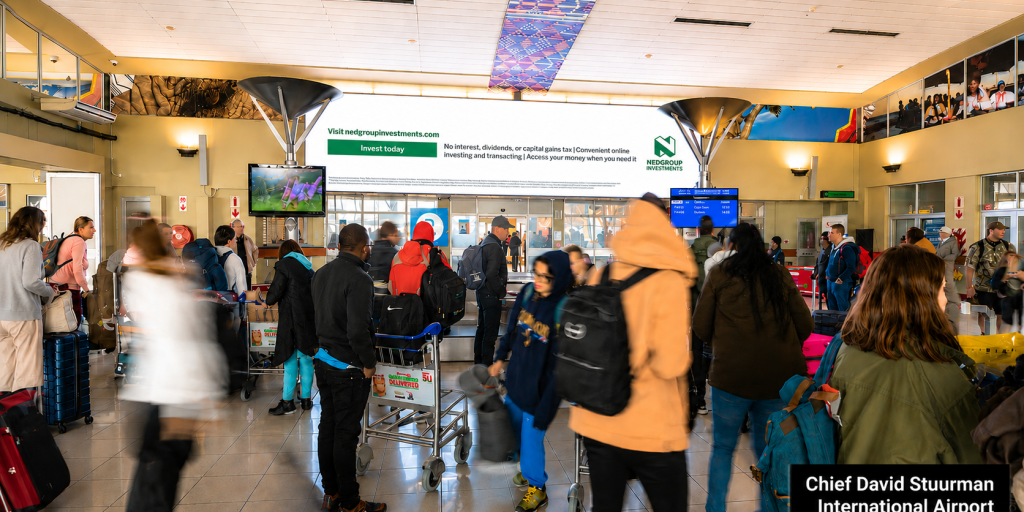
For years, South Africa’s biggest airports have dominated the travel conversation. But the country’s next aviation story may be happening somewhere closer to home.
From George and Gqeberha to Upington, Kimberley, Bloemfontein and the Eastern Cape, regional airports are getting bigger, busier and increasingly important to the communities around them.
And that shift could change more than just how South Africans travel.
The regional airport comeback
Airports Company South Africa (ACSA) is putting a reported R22 billion capital programme behind the country’s airport infrastructure, with major upgrades planned or underway across several regional gateways.
George Airport is a standout example.
The Garden Route gateway handled more than 911,000 two-way passengers in 2025, an 11% increase year-on-year. Now operating at full capacity, the airport is set for approximately R310 million in upgrades that will ultimately double terminal capacity to around two million passengers annually.
For a destination increasingly associated with tourism, remote work, second homes and lifestyle living, that expansion reflects a bigger trend: people are travelling directly to regional destinations rather than simply passing through major metropolitan hubs.
Gqeberha is getting a serious upgrade
In the Eastern Cape, the transformation is even more dramatic.
Chief Dawid Stuurman International Airport in Gqeberha is undergoing a R4.6 billion, five-year upgrade — described as the city’s biggest infrastructure investment since the 2010 FIFA World Cup.
The expanded terminal is expected to accommodate up to 3.5 million passengers annually, compared with current traffic of around 1.5 million.
That matters because airports are more than departure and arrival points. They are increasingly becoming the front door to a city’s economy, culture and lifestyle.
For a traveller arriving in Gqeberha, the airport can be the first introduction to its beaches, surf culture, universities, automotive industry, hospitality scene and business ecosystem.
Smaller terminals, bigger opportunities
The commercial opportunity is also catching attention.

Airport Ads, which operates across a regional airport network, believes these spaces can give brands access to highly engaged travellers without the visual clutter often found in larger transport environments.
Think of the moments when travellers are waiting for a flight, collecting luggage or deciding what to do once they arrive. They are already thinking about hotels, restaurants, transport, shopping, experiences and business.
That makes the airport environment particularly interesting for brands trying to influence decisions close to the point of spending.
But the bigger story isn’t advertising. It’s decentralisation.
A different map of South African travel
Recent ACSA figures show strong domestic passenger growth at several inland and regional airports. Upington and Bram Fischer each recorded 11% year-on-year domestic growth in April 2026, while Kimberley rose 6% and Gqeberha’s Chief Dawid Stuurman increased by 6%.
Each airport also connects to a very different regional economy.
George is tied to the Garden Route‘s tourism and lifestyle economy. Upington sits at the intersection of renewable energy, agriculture and extreme-climate automotive testing. Kimberley connects mining, agriculture and heritage tourism, while Bloemfontein remains an important business and government travel hub.
The result is a South Africa where opportunity isn’t necessarily concentrated around Johannesburg, Cape Town and Durban.
The gateway effect
For young South Africans, entrepreneurs, creatives and businesses, better regional connectivity can mean easier access to opportunities without always routing through a major city.
For destinations, it can bring visitors closer to where the economic activity actually happens.
And for brands, it creates new places to meet audiences.
The regional airport is evolving from a feeder point into a destination gateway — and with billions being invested in infrastructure, that transformation is only beginning.
The brands, businesses and destinations paying attention now could be the ones shaping what these new gateways mean for South Africa tomorrow.