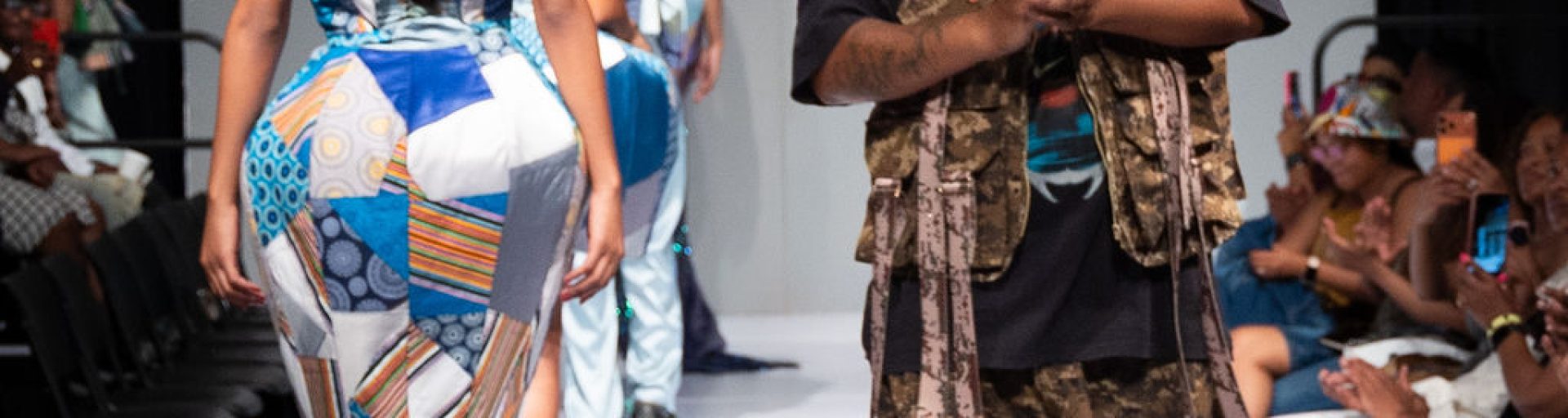
Fashion is more than what we wear. It is how we tell our stories, celebrate where we come from and imagine where we are going. At Soweto Fashion Week Spring/Summer 2026, that message came through in colour, movement, bold silhouettes and the creative confidence of a new generation of South African designers.
Held from 5 to 7 November at Soweto Theatre in Jabulani, the three-day showcase brought together emerging designers, fashion students and established creative names, turning the runway into a celebration of local talent and African expression.
But beyond the garments and glamorous runway moments, this season highlighted something bigger: the importance of creating spaces where young creatives can develop their identities, access opportunities and build businesses within South Africa‘s fashion industry.
More Than Fashion: A Platform for Emerging Voices
Opening night set the tone with RFL Studios presenting MORWAMOTHO, a menswear collection inspired by the Setswana phrase meaning “son of man”.
The collection explored elevated streetwear through solid and printed denim, tailored suiting, natural cottons and linens. Printed bucket hats and fringed canvas tote bags added a contemporary street-style edge, demonstrating how everyday influences can become distinctive fashion statements.
Lethu Textiles followed with a vibrant celebration of African prints, combining bold patchwork-inspired patterns, dramatic silhouettes and striking colour combinations. A lime-green floral dress with pink detailing and a tulle underskirt was among the standout expressions of playful, contemporary African fashion.
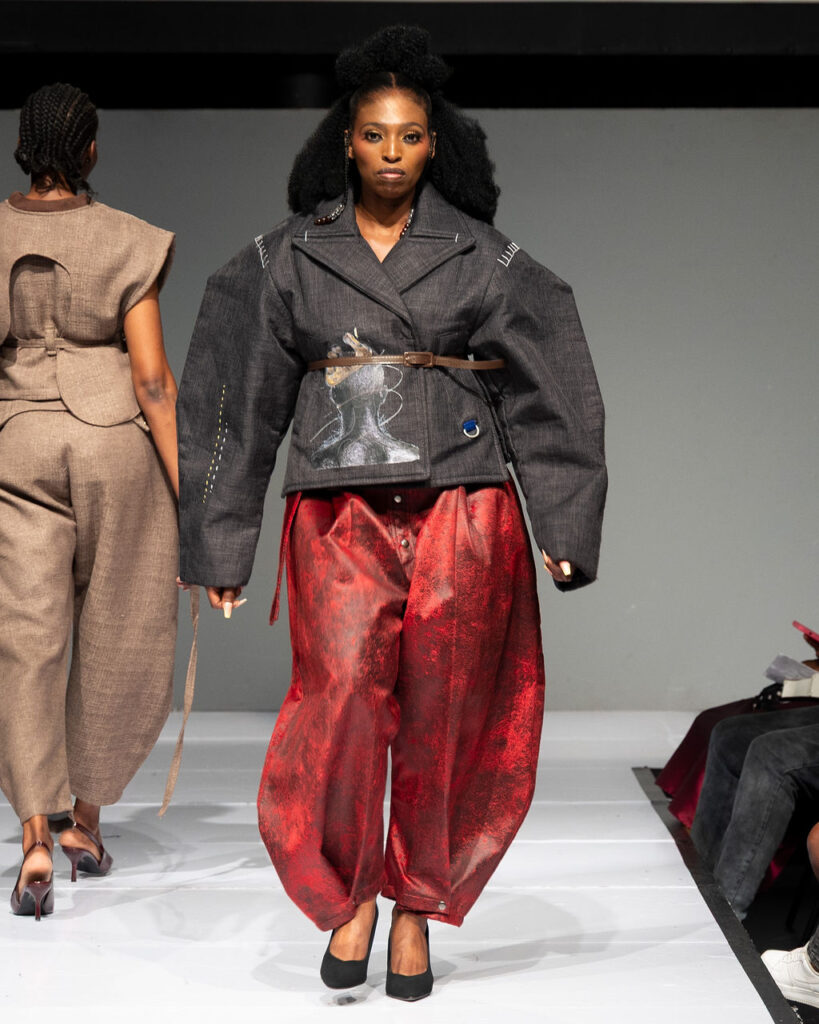
On the second night, Style by Ali brought its Onduty collection to the runway, experimenting with oversized shapes, barrel pants and utility-inspired designs. Mustard jumpsuits and red satin separates showed how practical fashion can still make a statement.
Personal Stories, Cultural Identity and New Opportunities
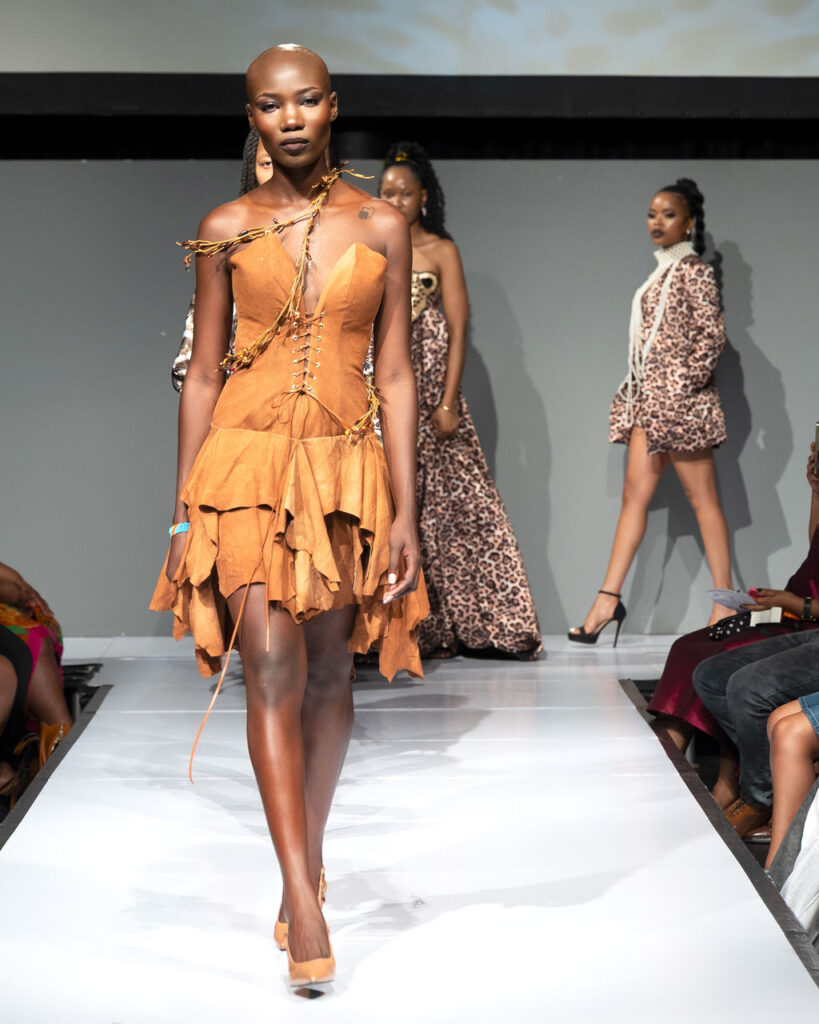
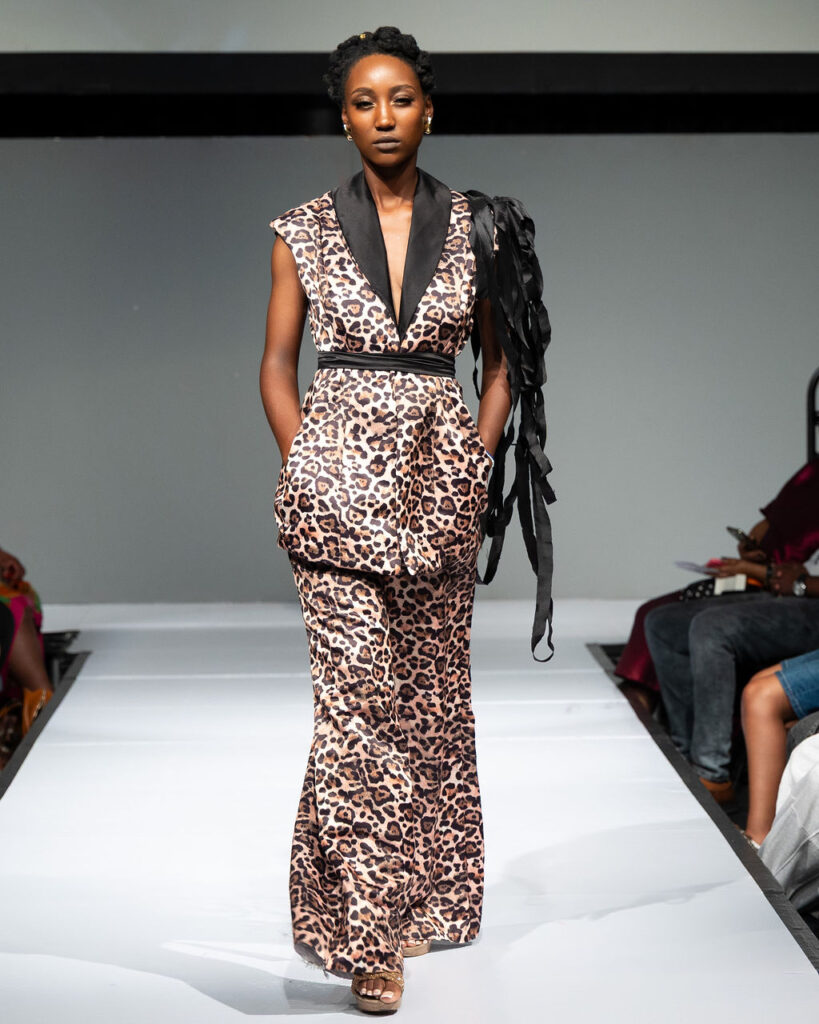
One of the season’s more personal showcases came from Precious Lulu Couture, whose collection paid homage to the designer’s roots through the symbolism of leopard print and the black panther.
The presentation also featured four designers from KwaZulu Fashion Hut, an incubation programme focused on mentoring and developing emerging fashion talent.
Their participation highlighted an important part of the local creative economy: talented designers need more than inspiration. They need mentorship, exposure and opportunities to connect with audiences and potential customers.
For the participating KwaZulu-Natal designers, returning to Soweto Fashion Week for a second showcase was another opportunity to take their work beyond their home province.
The runway also welcomed actress Nasiphi Ntabeni, best known for playing Nontsikelelo “Ntsiki” Mabandla on Mzansi Magic‘s Inimba. Her modelling debut for Precious Lulu Couture added another entertainment-industry connection to a showcase already rich in creative expression.
From Red-Carpet Glamour to Streetwear Energy
The final night demonstrated the diversity of South African fashion.
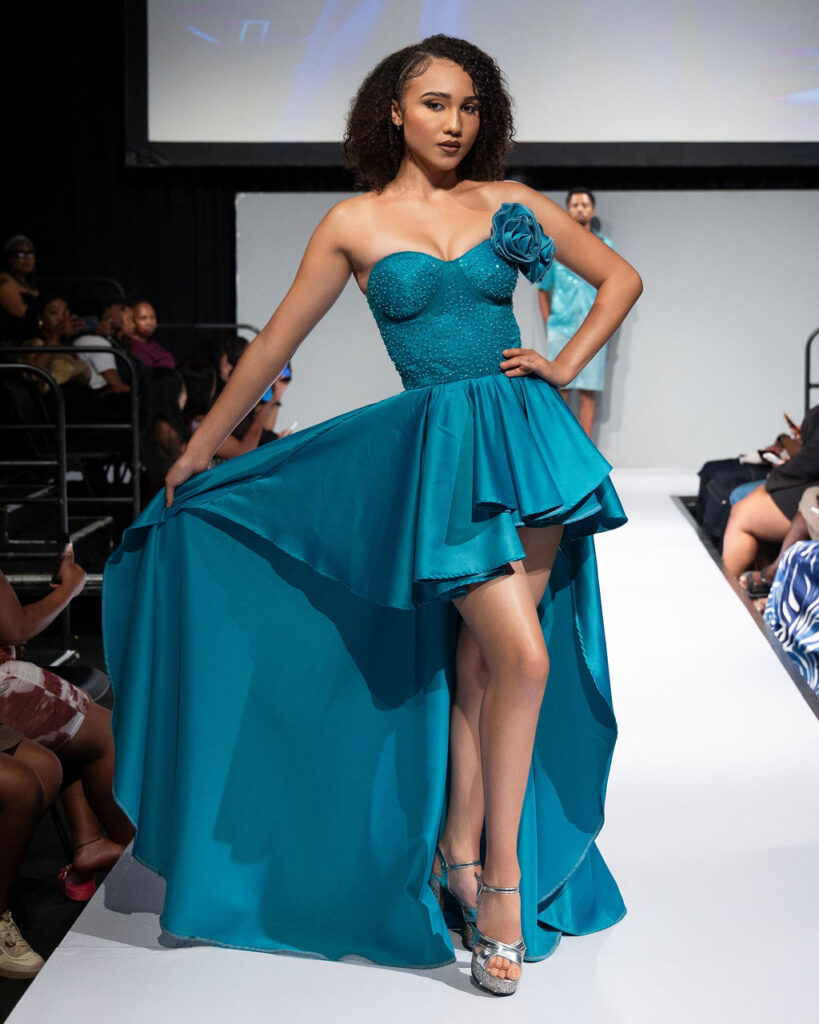
Wanda Wear, led by Wanda Baloyi, presented flowing seasonal pieces, colourful designs and elegant combinations. A green ball gown, blue two-piece and black-and-white printed satin sets captured the collection’s relaxed sophistication.
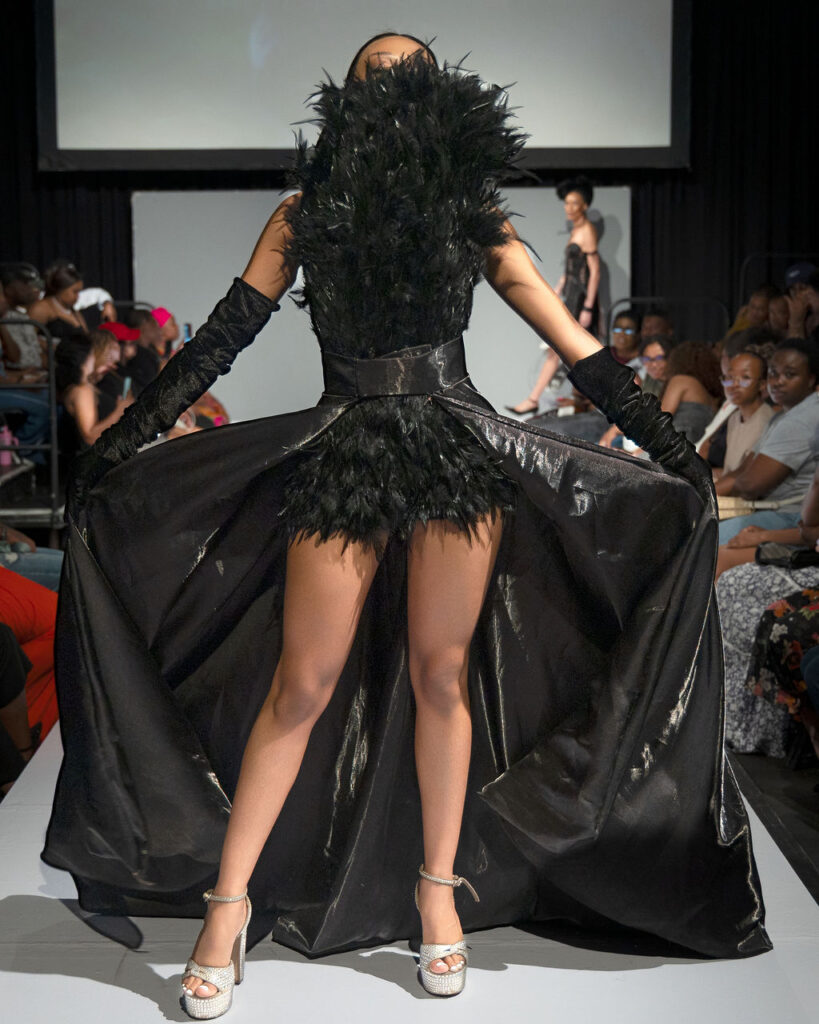
Scalo’s Sello Medupe, known for dressing some of South Africa’s biggest celebrities, brought a more glamorous perspective. His collection featured embellished mini dresses, feather detailing, sculptural ruffles and statement sleeves designed for the country’s growing social and entertainment calendar.
Closing the season, Dope Store shifted the energy towards sporty streetwear. Neon yellow-green accents, tennis-inspired details, baseball-style tops and graphic pieces featuring Arthur Ashe references brought a youthful, relaxed attitude to the runway.
The contrast between these collections reinforced the strength of an industry that does not have to fit into one aesthetic. South African fashion can be glamorous, experimental, street-inspired and deeply connected to cultural identity, all at once.
Black Wines Matter Takes Local Creativity Beyond the Runway
Perhaps one of the season’s most interesting developments was the partnership between Soweto Fashion Week and Black Wines Matter.
Founded by entrepreneur Mbali Masike-Malebye through Mbali Brand Solutions, the initiative brought small wine businesses from her academy into the fashion showcase.
The collaboration connected two creative industries that share a common challenge: ensuring that emerging Black-owned businesses receive visibility, recognition and meaningful opportunities to grow.
“Black excellence is not one industry; it is a whole culture rising together,”.
Masike-Malebye explained
It is an important perspective. Building a stronger creative economy means looking beyond individual industries and creating connections between fashion, food, wine, entertainment, design and entrepreneurship.
The Future of South African Fashion Is Being Built Locally
Soweto Fashion Week Spring/Summer 2026 offered more than a preview of seasonal trends. It demonstrated the value of platforms that bring established names and emerging talent into the same creative space.
With support from partners including the City of Johannesburg, Joburg City Theatres, Soweto Theatre, Black Wines Matter Academy, PMC Make-Up Academy and local media partners, the showcase continued to position Soweto as an important meeting point for fashion and creative expression.
For young South Africans looking to enter the fashion industry, the message is clear: local talent deserves visibility, investment and opportunities to grow.
And sometimes, the next big name in fashion is already working on their collection, waiting for the right runway.