What happens when experienced entrepreneurs have to explain their business ideas to a panel of 10-year-olds? Suddenly, complicated terminology and polished presentations might not be enough.
The 2026 Nedbank Pitch & Polish competition has introduced an unexpected test for four semi-finalists: pitching their businesses to three young entrepreneurs from Radley Private School. With a place in the final and a share of the R1 million prize package at stake, the challenge put one essential business skill under the spotlight: the ability to make an idea easy to understand.
And sometimes, the toughest questions come from the youngest people in the room.
Why Simplicity Can Make or Break a Business
Entrepreneurs often spend months refining their business models, preparing presentations and learning how to impress potential investors. But when an idea is buried beneath industry jargon and complicated explanations, even a promising business can struggle to communicate its value.
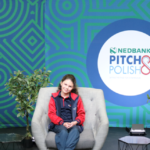
That was the challenge facing the semi-finalists when they stepped in front of Arush, Monroe and Naomi, Grade 4 and 5 learners selected for their entrepreneurial abilities.
The three young judges earned their places on the panel after presenting their own business ideas to Allon Raiz, CEO of Raizcorp and a judge on Nedbank Pitch & Polish. Their confidence, presentation skills and ability to think critically helped them stand out.
Their mission was straightforward: listen, ask questions and challenge the entrepreneurs to explain exactly what their businesses do.
According to Raiz, if an entrepreneur cannot explain their business in a way that a child can understand, they may still be too close to its complexity.
For South Africa‘s aspiring business owners, that is a valuable lesson. Whether you’re building a township startup, launching a creative agency or turning a side hustle into a full-time operation, being able to communicate your value clearly can be just as important as having a great idea.
Young Minds, Real Business Lessons
The episode also highlights why entrepreneurship education deserves a place in conversations about the future of South African business.
At Radley Private School, entrepreneurship is taught as a subject from Grade R through to matric. The aim is to develop independent thinking, problem-solving abilities, commercial awareness and the confidence to take ownership of the future.
Principal Charné De Gouveia believes entrepreneurship goes beyond simply starting a business. It equips learners with skills to navigate real-world challenges and make decisions for themselves.
That perspective matters in a country where young people are continually exploring ways to create opportunities, develop their skills and build sustainable livelihoods.
Introducing entrepreneurial thinking early can help learners recognise problems as opportunities, communicate their ideas and understand the effort required to turn concepts into something practical.
It also challenges the idea that business knowledge belongs exclusively to adults. Young people can ask meaningful questions, spot gaps in an explanation and offer perspectives that more experienced professionals might overlook.
The Pitch Is Only as Strong as the Explanation
For the four semi-finalists, the experience offered a different kind of pressure. Instead of simply impressing seasoned business judges, they had to strip away the complexity and make their ideas understandable to a younger audience.
For viewers, the lesson extends beyond the competition itself.
A business pitch is not just about sounding impressive. It is about helping someone understand the problem you’re solving, why your solution matters and what makes it worth supporting.
That principle applies across industries, from technology and entertainment to fashion, retail and the creative economy.
The 2026 Nedbank Pitch & Polish competition is sponsored by Nedbank and powered by Raizcorp. As the competition moves towards its final stage, the young judges’ challenge offers a timely reminder: sometimes, the best way to test an idea is to explain it to someone who has no reason to pretend they understand it.
Because if your idea is genuinely valuable, you should be able to make people see it without hiding behind complicated words.